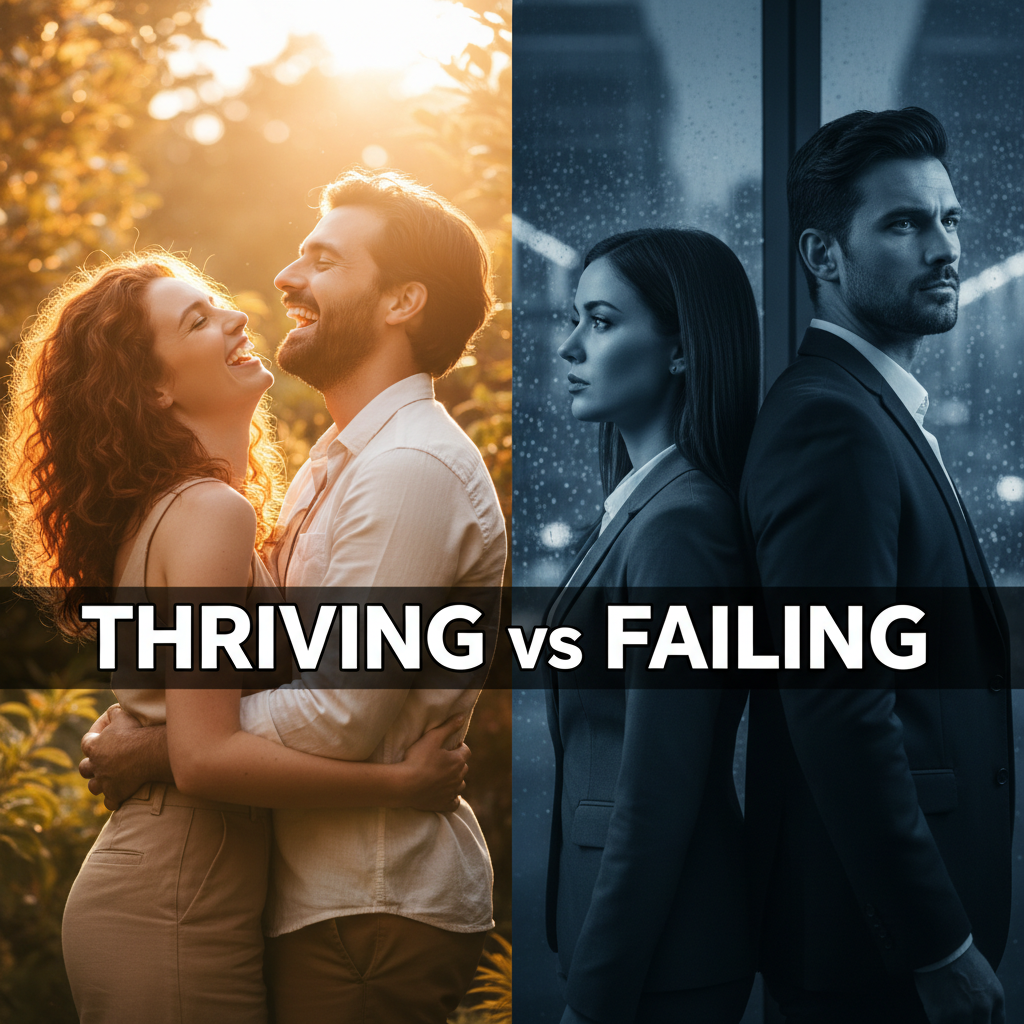
Every relationship goes through seasons — moments of deep connection and periods of disconnect. But have you ever wondered what truly separates couples who thrive from those who slowly fall apart? Understanding the difference between thriving failing relationships isn’t just about recognizing red flags; it’s about knowing what healthy love actually looks and feels like in everyday life. Whether you’ve been together for six months or sixteen years, the patterns you build together will either strengthen your bond or quietly erode it. In this article, we’ll explore five powerful signs that reveal exactly where your relationship stands — and more importantly, what you can do to shift things in a positive direction.
Sign #1 – Communication: The Foundation That Makes or Breaks Everything
If there’s one thing relationship experts, therapists, and long-married couples consistently agree on, it’s this: communication is everything. It’s not just about talking — it’s about truly being heard, understood, and responded to with care and respect. Thriving couples have mastered the art of open, honest, and compassionate communication. Failing relationships, on the other hand, are often marked by silence, avoidance, or explosive outbursts that leave both partners feeling worse than before.
What Communication Looks Like in a Thriving Relationship
- Active listening — partners genuinely pay attention without planning their rebuttal
- Vulnerability — both people feel safe sharing fears, desires, and insecurities
- Non-defensive responses — feedback is received with openness rather than hostility
- Clear expression of needs — neither partner is left guessing what the other wants
Consistent check-ins — couples regularly ask how the other is doing emotionally
What Communication Looks Like in a Failing Relationship
- Frequent stonewalling or giving the silent treatment
- Conversations that escalate into arguments within minutes
- One or both partners feeling unheard or dismissed
- Passive-aggressive behavior instead of direct conversation
- Avoidance of important topics out of fear of conflict
The good news? Communication is a learnable skill. It takes practice, patience, and a willingness to be uncomfortable. Even couples who have fallen into poor communication habits can turn things around when both partners commit to doing the work. Start small — set aside 15 minutes each evening to genuinely check in with each other, no phones, no distractions.
Research from the Gottman Institute — one of the most respected names in couples therapy — shows that couples who communicate positively at a 5:1 ratio (five positive interactions for every negative one) are far more likely to stay together long-term. This “magic ratio” is one of the clearest predictors of relationship success.
Sign #2 – Emotional Intimacy: Are You Truly Connected or Just Coexisting?
Emotional intimacy is the invisible thread that holds two people together through life’s inevitable storms. It’s what makes you feel like your partner truly knows you — not just your routines or preferences, but your deepest fears, your biggest dreams, your most embarrassing moments, and your most cherished memories. When emotional intimacy is strong, couples feel like best friends. When it fades, they can start to feel like strangers sharing a home.
Signs of Strong Emotional Intimacy
- You share your thoughts and feelings openly without fear of judgment.
- You genuinely enjoy spending time together, even doing mundane things.
- You celebrate each other’s wins and show up during each other’s losses.
- You know each other’s love language and actively speak it.
- You feel emotionally safe — like your partner is your “person.”
Signs Emotional Intimacy Is Fading
- Conversations stay surface-level — schedules, logistics, rarely feelings.
- You feel lonely even when your partner is in the same room.
- There’s an emotional wall between you that neither knows how to break down.
- You find yourself sharing personal things with friends instead of your partner.
- You’ve stopped being curious about each other’s inner world.
Rebuilding emotional intimacy requires intention. One of the most effective ways to do this is through shared experiences and playful connection. When couples laugh together, try new things, and create positive memories, emotional closeness naturally follows. This is why relationship experts often recommend incorporating fun, lighthearted rituals into your routine — more on that shortly.
Sign #3 – Physical Intimacy and Passion: The Difference Between Thriving Failing Couples
Let’s talk about the elephant in the room: physical intimacy and passion. This is one of the most telling signs when it comes to the difference between thriving failing couples. It’s not just about sex — although that’s certainly part of it. Physical intimacy includes holding hands, kissing, cuddling, playful touch, and any form of affectionate physical connection that signals to your partner: I still want you. I still choose you.
Physical Intimacy in Thriving Relationships
- Regular affectionate touch — hugs, kisses, hand-holding — that happens naturally and freely
- An active and mutually satisfying sexual connection
- Openness to discussing desires, fantasies, and preferences without shame
- Physical playfulness and flirtation that keeps the spark alive
- Both partners feel desired and appreciated physically
Physical Intimacy in Failing Relationships
- Touch becomes rare or feels transactional
- Sex life becomes infrequent, routine, or non-existent
- One or both partners feel unwanted or disconnected physically
- Affection feels forced or uncomfortable
- Discussions about physical intimacy are avoided or met with defensiveness
It’s completely normal for the passion to shift over time — especially after major life events like having children, changing careers, or dealing with health challenges. But the couples who thrive don’t just let passion disappear. They actively work to reignite it. They flirt. They surprise each other. They make intimacy a priority, not an afterthought.
One creative and fun way couples are doing this today is through the CCB – Couples Couponbook app. This innovative mobile app allows adults 18+ to create, send, and exchange personalized naughty and romantic coupons with their partner. Think of it as a digital intimacy toolkit — a playful way to express desires, plan romantic surprises, and turn up the heat in your relationship. Whether it’s a coupon for a sensual massage, a spontaneous date night, or something more daring, CCB helps couples communicate their desires in a fun, low-pressure way.
Sign #4 – Conflict Resolution: Fighting Fair vs. Fighting Dirty
Here’s a truth that surprises many people: thriving couples argue too. Conflict is a natural and even healthy part of any intimate relationship. The difference isn’t whether couples fight — it’s how they fight. Couples in healthy relationships have learned to navigate disagreements in ways that bring them closer rather than tearing them apart.
Healthy Conflict Resolution Habits
- Staying on topic — addressing the current issue without bringing up past grievances
- Using “I” statements — “I feel hurt when…” instead of “You always…”
- Taking time-outs — stepping away to cool down before continuing a heated discussion
- Seeking to understand — prioritizing empathy over winning the argument
- Apologizing sincerely — and meaning it, without conditions or qualifiers
- Repairing after conflict — re-connecting through affection, humor, or a kind gesture
Toxic Conflict Patterns to Watch Out For
- Contempt — eye-rolling, sarcasm, belittling — this is the most damaging behavior in relationships according to Dr. John Gottman
- Criticism — attacking your partner’s character rather than addressing a specific behavior
- Defensiveness — refusing to take any responsibility and always deflecting blame
- Stonewalling — completely shutting down and refusing to engage
- Bringing up the past — using old wounds as weapons in current arguments
Gottman famously identified these four behaviors — contempt, criticism, defensiveness, and stonewalling — as “The Four Horsemen” of relationship apocalypse. If these patterns are frequent in your relationship, it’s a serious signal that change is needed. – Account Deletion
Improving conflict resolution often starts with a shift in mindset. Rather than seeing your partner as the enemy during a disagreement, try to remind yourself that you’re both on the same team. The problem is the problem — not your partner. This small but powerful reframe can completely transform how you handle disagreements.
Sign #5 – Intentional Effort: Thriving Couples Never Stop Dating Each Other
One of the most overlooked differences between couples who thrive and those who fail is this: thriving couples are intentional. They don’t assume that love will sustain itself on autopilot. They understand that a relationship is a living thing — it needs consistent nourishment, attention, and care to grow.
In the early stages of a relationship, effort comes naturally. You dress up for dates. You send flirty texts. You plan surprises. You can’t stop thinking about the other person. But as time goes on and life gets busy, it’s easy to let that intentional energy slip. The couples who last are the ones who find ways to keep the courtship alive — even after years together. (Learn more about Difference Between Thriving Failing)
Ways Thriving Couples Stay Intentional
- Regular date nights — not just dinner, but genuinely trying new experiences together
- Daily acts of appreciation — expressing gratitude for the little things your partner does
- Maintaining inside jokes and rituals — the small things that make your relationship uniquely yours
- Surprising each other — spontaneous gestures that show you’re thinking of them
- Setting relationship goals together — discussing where you want to grow as a couple
- Flirting and playfulness — keeping the lighthearted energy alive, even after years together
- Exploring new forms of intimacy — being open to trying new things that excite both partners
Signs a Couple Has Stopped Being Intentional
- Date nights are rare or non-existent
- Compliments and appreciation have become uncommon
- Both partners feel taken for granted
- The relationship has become purely functional — bills, chores, routines
- There’s a sense of boredom or stagnation that neither partner addresses
The great thing about intentional effort is that it doesn’t require grand gestures or expensive trips. Sometimes the most powerful acts of love are the simplest ones — a handwritten note, a surprise lunch delivery, or a playful message that reminds your partner you’re thinking about them.
Tools That Help: How the CCB – Couples Couponbook App Reignites the Spark
In today’s digital world, couples have access to creative tools that can genuinely make a difference in the quality of their relationship. One that’s been gaining serious attention is the CCB – Couples Couponbook app — a beautifully designed mobile app that helps adults 18+ create, send, and exchange personalized romantic and naughty coupons with their partner.
Think about it: one of the biggest challenges couples face is communicating desires and creating spontaneous moments of connection. The CCB app makes this effortless and fun. Instead of hoping your partner picks up on subtle hints or struggling to voice what you want, you can simply create a coupon that says it for you — with as much romance, playfulness, or spice as you’d like.
What Makes the CCB – Couples Couponbook App So Effective?
- Personalization — Create coupons tailored specifically to your relationship, your preferences, and your partner’s desires
- Ease of use — The app is intuitive and fun to navigate, making the experience enjoyable from the very first coupon
- Romantic and naughty options — Whether you want to plan a cozy movie night or something far more adventurous, the app covers it all
- Sending and exchanging — You can send coupons directly to your partner, creating a cycle of anticipation and excitement
- Ignites conversation — Sometimes a playful coupon opens the door to conversations about desires that might otherwise feel awkward to bring up directly
The CCB app is particularly useful for couples who feel like they’ve fallen into a routine and want to inject some spontaneity and excitement back into their relationship. It’s also a wonderful tool for long-distance couples who want to maintain intimacy despite the miles between them.
Here’s how some couples are using the CCB – Couples Couponbook to strengthen their bond:
- Weekly coupon exchanges — Each partner creates and sends one coupon at the start of the week, building anticipation for what’s to come
- Anniversary and birthday surprises — Giving a full coupon book as a gift filled with romantic and intimate experiences
- Reconnection rituals — After a period of stress or distance, using coupons to intentionally re-engage with each other
- Spicing up a long-term relationship — Introducing playful new experiences that break the monotony of routine
- Long-distance love — Sending digital coupons that can be redeemed when partners are finally reunited
The beauty of the CCB app is that it transforms the sometimes-awkward task of expressing desire into something fun, lighthearted, and deeply connecting. It removes the pressure and replaces it with excitement. And in a relationship, that shift in energy can make all the difference.
Why Playfulness Matters More Than You Think
Relationship researchers have found that couples who laugh together, play together, and maintain a sense of fun tend to report higher levels of satisfaction and commitment. Playfulness signals to your partner that you still see them as someone exciting — not just a co-parent, a roommate, or a financial partner. It keeps the relationship feeling fresh and dynamic. – Account Deletion
The CCB – Couples Couponbook app taps directly into this research-backed truth. By gamifying intimacy in a healthy, consensual, and creative way, it helps couples of all ages and relationship stages reconnect with the playful, passionate side of their partnership.
Understanding the Long-Term Patterns: What Research Tells Us
Beyond the five signs we’ve covered, it’s worth understanding the broader landscape of relationship research. Decades of studies from institutions like the Gottman Institute, the University of California, and Harvard’s Study of Adult Development all point to similar conclusions about what separates lasting, fulfilling relationships from those that deteriorate over time.
Key Research Findings on Thriving Relationships
- Shared meaning — Couples who build a life rich with shared rituals, traditions, and goals report deeper satisfaction and connection
- Turning toward bids for connection — Dr. John Gottman’s research found that couples who respond positively to each other’s small attempts at connection (“bids”) are significantly more likely to stay together
- Positive sentiment override — Happy couples tend to view their partner’s actions through a positive lens, giving them the benefit of the doubt even in ambiguous situations
- Growth mindset about love — Couples who believe love takes work and can always improve tend to put in that work and reap the rewards
- Friendship as the foundation — The couples who thrive the most describe their partner as their best friend
These findings reinforce a crucial point: thriving relationships don’t happen by accident. They are built, piece by piece, through conscious choices, consistent effort, and a genuine commitment to growing together rather than apart. (Learn more about Difference Between Thriving Failing)
How to Assess Your Own Relationship Right Now
After reading through these five signs, you might be doing a mental inventory of your own relationship. That’s a healthy and courageous thing to do. Here’s a simple framework you can use to honestly evaluate where you and your partner currently stand:
A Quick Self-Assessment Checklist
- Do we communicate openly and honestly, without fear or defensiveness? Yes / No / Sometimes
- Do I feel emotionally close to my partner — like they truly know me? Yes / No / Sometimes
- Is there physical affection and passion in our relationship? Yes / No / Sometimes
- Do we handle conflict in a way that brings resolution rather than resentment? Yes / No / Sometimes
- Are we intentional about investing time and energy into our relationship? Yes / No / Sometimes
If you answered “Yes” to most of these, your relationship is showing strong signs of thriving. If “Sometimes” or “No” dominated your answers, don’t panic — awareness is the first step toward change. Many couples have turned things around from far more difficult places than where you might be right now.
Consider sharing this checklist with your partner and comparing answers. Sometimes simply having that conversation is the catalyst for meaningful growth. And if you want to make the conversation more fun and less intimidating, try starting it over a playful activity — like creating your first set of coupons together on the CCB – Couples Couponbook app.
Rebuilding a Failing Relationship: It’s More Possible Than You Think
Let’s be clear about something important: recognizing signs of a failing relationship is not a death sentence for your partnership. Relationships can and do recover — even from significant damage — when both partners are willing to engage honestly and put in the work.
Couples therapy is one of the most effective tools available, and there’s absolutely no shame in seeking professional support. A skilled therapist can help you break destructive patterns, improve communication, and rebuild trust and intimacy in ways that feel sustainable.
In addition to therapy, small daily actions accumulate into major change over time. Rebuilding a relationship is less about grand gestures and more about consistent, loving choices made every single day. Choosing to say “I love you” before bed. Choosing to ask “How are you really feeling?” Choosing to reach out and hold your partner’s hand during a quiet moment. These small choices compound.
Practical Steps to Start Rebuilding Today
- Have an honest, compassionate conversation about where you both feel the relationship is struggling
- Commit to one small daily act of appreciation or affection
- Plan a date night — even something simple — and protect that time fiercely
- Explore new ways to connect, like trying the CCB – Couples Couponbook app together
- Seek couples counseling if deeper issues require professional support
- Read relationship books together — works by Gary Chapman, John Gottman, or Esther Perel are excellent starting points
- Practice gratitude — individually and as a couple — for what’s going right
Final Thoughts: Which Side of the Line Are You On?
Understanding the difference between thriving failing relationships ultimately comes down to one thing: awareness followed by action. The couples who thrive aren’t perfect — they argue, they have hard seasons, they face real-world stress just like everyone else. What sets them apart is their shared commitment to showing up for each other, even when it’s difficult.
The five signs we explored — communication, emotional intimacy, physical passion, conflict resolution, and intentional effort — form a blueprint for what a flourishing relationship looks like in practice. Use them as a mirror, not a measuring stick designed to make you feel bad. The goal isn’t perfection; it’s progress.
And if you’re looking for a fun, creative, and genuinely effective way to reconnect with your partner today, give the CCB – Couples Couponbook app a try. Create a coupon that expresses something you’ve been wanting to share. Send it to your partner and watch what happens. Sometimes the simplest gestures spark the most powerful reconnections.
Your relationship is worth the effort. And the best time to start investing in it is always right now.