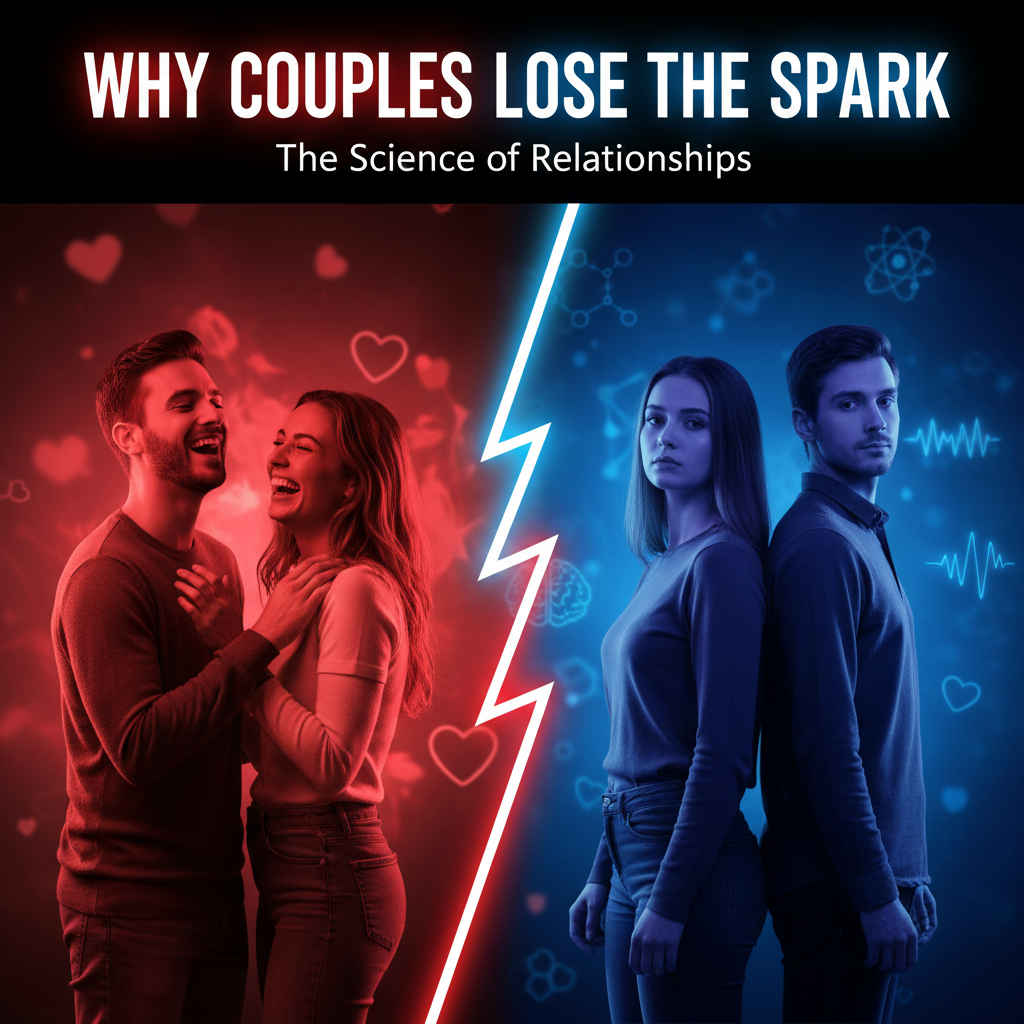
Have you ever wondered why couples who once laughed together, played together, and teased each other endlessly suddenly find themselves living like polite strangers under the same roof? The science behind couples lose their playful bonds is more fascinating — and more actionable — than most people realize. Researchers in relationship psychology have spent decades studying what happens to the joy, laughter, and lighthearted connection that define the early stages of a romantic partnership.
The findings are both sobering and hopeful. Understanding the psychological and neurological forces at work can help couples not only recognize the warning signs but actively reverse the damage before the spark fades completely. In this article, we’ll explore five scientifically grounded reasons why couples lose their playful connection, and we’ll introduce practical, fun tools — including the CCB – Couples Couponbook app — that can help reignite the passion, laughter, and intimacy you may have thought was gone forever.
What Is a Playful Bond and Why Does It Matter?
A playful bond in a romantic relationship refers to the shared experience of humor, teasing, spontaneous fun, and lighthearted intimacy between partners. It’s the inside jokes that make you burst out laughing in public, the tickle fights that dissolve into kisses, and the surprise date nights that leave both of you feeling like teenagers again.
According to relationship researchers, playfulness is not just a “nice to have” — it’s a fundamental pillar of romantic satisfaction. A 2019 study published in the Journal of Research in Personality found that couples who engage in regular playful interactions report significantly higher levels of relationship satisfaction, emotional closeness, and sexual intimacy than those who don’t.
Playfulness also serves as a natural stress buffer. When couples can laugh together, they are better equipped to handle conflict, navigate life challenges, and maintain emotional connection during difficult times. Losing that playful dynamic, therefore, is not a trivial matter — it signals a deeper erosion of the relationship’s emotional foundation.
Signs That Your Playful Bond Is Fading
- Conversations are mostly practical or logistical (bills, schedules, chores)
- You rarely laugh together spontaneously
- Teasing feels awkward or unwelcome
- Date nights feel more like business meetings
- You’ve stopped surprising each other
- Physical affection has become routine or infrequent
- You feel more like roommates than romantic partners
If several of these resonate, you’re not alone — and the science explains exactly why this happens.
Reason 1: Neurochemical Changes After the Honeymoon Phase
One of the most scientifically well-documented reasons couples lose their playful bond is simply brain chemistry. In the early stages of a relationship, your brain is flooded with a cocktail of neurochemicals that create the euphoric feeling commonly known as “falling in love.”
These chemicals include:
- Dopamine — the “reward” chemical that creates feelings of pleasure and anticipation
- Norepinephrine — which triggers excitement and the racing heart you feel around a new partner
- Phenylethylamine (PEA) — sometimes called the “love molecule,” responsible for that giddy, can’t-stop-smiling feeling
- Serotonin — which dips during early love, creating an almost obsessive focus on your partner
This neurochemical surge makes everything feel exciting and new. You’re naturally more playful because your brain is in a heightened state of reward-seeking. Every interaction feels like a gift.
However, this phase typically lasts between 12 and 24 months. As the brain adjusts to the presence of a long-term partner, it produces fewer of these excitement-driving chemicals and shifts into a more stable, attachment-based mode driven by oxytocin and vasopressin. These are the chemicals of deep bonding and security — wonderful in their own right, but far less conducive to spontaneous laughter and playful flirtation.
What the Science Tells Us About Reigniting Neurochemical Excitement
The good news? You can deliberately trigger dopamine and excitement in a long-term relationship through novelty and surprise. Research by Dr. Arthur Aron at Stony Brook University demonstrated that couples who regularly engage in new and exciting activities together show increased relationship satisfaction and report higher feelings of romantic attraction — essentially mimicking the neurochemical effects of the early relationship stage.
This is exactly why introducing surprise elements — like naughty or romantic coupons through an app like CCB – Couples Couponbook — can be so powerfully effective. Surprise activates the dopamine system. Even the anticipation of a coupon can reignite that playful, excited energy.
Reason 2: The Stress Accumulation Effect
Modern life is stressful. Between demanding careers, financial pressures, parenting responsibilities, health concerns, and the constant noise of the digital world, couples are carrying more chronic stress than ever before. And stress is one of the most effective killers of playfulness known to science.
When the body is under chronic stress, it produces elevated levels of cortisol — the primary stress hormone. High cortisol levels suppress the production of oxytocin (the bonding hormone), reduce libido, impair emotional regulation, and make people less receptive to humor and play. – Account Deletion
Here’s how the stress accumulation effect plays out in relationships:
- External stress (work, finances, family) increases cortisol levels
- High cortisol suppresses oxytocin, reducing feelings of closeness
- Partners become emotionally withdrawn or irritable
- Playful interactions feel inappropriate or exhausting
- The couple settles into survival mode, prioritizing logistics over connection
- The playful dynamic slowly disappears, often without either partner noticing
The compounding nature of this cycle is what makes it so dangerous. Each stressful week without connection makes it slightly harder to reconnect the next week. Over months and years, the distance becomes the new normal.
Breaking the Stress-Playfulness Cycle
The antidote isn’t eliminating stress (impossible) — it’s creating intentional islands of joy within the stress. Even brief, playful interactions can lower cortisol and boost oxytocin, interrupting the cycle. A flirty text, a silly challenge, or a romantic coupon exchanged during a stressful week sends a powerful signal: we’re still us, even in the hard times.
Reason 3: Communication Patterns That Kill Playfulness
Dr. John Gottman, one of the world’s leading relationship researchers, has identified specific communication patterns that predict relationship dissatisfaction and disconnection. These patterns don’t just cause conflict — they systematically erode the playful atmosphere that healthy couples depend on.
The most damaging patterns include: (Learn more about Science Behind Couples Lose)
- Criticism — attacking a partner’s character rather than addressing a specific behavior
- Contempt — eye-rolling, sarcasm used as a weapon, and mockery that demeans rather than teases
- Defensiveness — responding to feedback with counter-attacks rather than openness
- Stonewalling — emotional withdrawal and silence during difficult conversations
Gottman calls these the “Four Horsemen” of relationship breakdown. When these patterns become habitual, humor and play feel unsafe. Teasing — which requires vulnerability and trust — becomes dangerous territory. Neither partner wants to be playful when they fear their overture might be met with contempt or criticism.
Rebuilding Safe Playfulness Through Positive Interactions
Gottman’s research also shows that for every negative interaction in a relationship, couples need at least five positive interactions to maintain a healthy emotional balance. Playful exchanges, flirty gestures, and romantic surprises all count as powerful positive interactions that can help restore this balance.
This is why tools that make positive, playful interaction easy and fun — like creating and exchanging romantic or naughty coupons via the CCB – Couples Couponbook app — are more than just novelties. They’re relationship repair mechanisms grounded in behavioral science.
Reason 4: The Loss of Novelty and Spontaneity
The human brain is wired for novelty. From an evolutionary perspective, new stimuli demand attention because they might represent opportunity or danger. In relationships, this means that familiar partners naturally receive less neurological excitement than new ones — not because the love has diminished, but because the brain has categorized them as “known” and no longer allocates the same reward-system resources to their presence.
This is sometimes called hedonic adaptation — the tendency for humans to return to a baseline level of emotional response regardless of positive changes in their environment. Just as a pay raise feels wonderful for a few months before becoming “normal,” a loving partner can become so familiar that the brain stops generating the excitement signals that fuel playfulness and passion.
Studies in relationship neuroscience have found that:
- Couples in long-term relationships show reduced activation in reward-center brain regions when shown photos of their partner, compared to the robust activation seen in new couples
- This reduction correlates with decreased reported passion and spontaneity
- However, introducing novelty — new experiences, environments, and interactions — can partially restore this reward-center activation
The Power of Intentional Novelty in Long-Term Relationships
The solution to hedonic adaptation is intentional novelty. This doesn’t mean you need to climb a mountain together every weekend (though that would help!). Small, consistent surprises can be equally powerful. A handwritten note left in an unexpected place. A spontaneous dinner at a new restaurant. Or better yet — a naughty or romantic coupon that promises a specific, exciting experience, delivered through an app designed exactly for this purpose.
The CCB – Couples Couponbook app is built on this exact science. By allowing partners to create, send, and exchange personalized coupons — from the romantic to the delightfully naughty — it introduces a consistent, easy source of novelty and surprise that keeps the brain’s reward system engaged and the relationship feeling fresh.
Reason 5: Emotional Disconnection and Vulnerability Walls
Playfulness requires vulnerability. To tease your partner, to be silly together, to engage in light flirtation — all of these require a willingness to be seen, to risk looking foolish, and to trust that your partner will receive your playfulness warmly. When emotional disconnection grows, so do the walls that block vulnerability. – Account Deletion
Research by Dr. Brené Brown, a renowned vulnerability researcher at the University of Houston, confirms that vulnerability is the birthplace of connection. Without it, intimacy — emotional and physical — cannot thrive. And without intimacy, playfulness withers because it no longer feels safe.
Common reasons couples develop emotional disconnection include:
- Unresolved resentments from past conflicts
- Feeling unseen, unappreciated, or taken for granted
- Differences in emotional expression styles
- Trauma or mental health challenges affecting one or both partners
- The slow drift of emotional distance over time without deliberate reconnection
- Lack of physical affection, which reduces oxytocin and deepens disconnection
Playfulness as a Doorway Back to Emotional Connection
Interestingly, playfulness can also serve as a bridge back to vulnerability. Sometimes it’s easier to lower the walls through laughter than through a deep emotional conversation. A shared giggle, a playful dare, or a flirty challenge can create enough safety and warmth to open the door to deeper connection. This is why therapists often recommend incorporating play into couples’ reconnection practices, not as a distraction from deeper issues, but as a warm-up to deeper intimacy.
The Science Behind Couples Lose Playfulness — And How to Reconnect
Understanding the science behind couples lose their playful dynamics gives us a roadmap for restoration. The key insights from psychology and neuroscience converge on several actionable principles: (Learn more about Science Behind Couples Lose)
- Trigger novelty and surprise regularly — to activate the brain’s reward system and counteract hedonic adaptation
- Create positive interaction rituals — to rebuild the 5:1 positive-to-negative interaction ratio recommended by relationship science
- Lower cortisol through shared joy — even brief playful moments can interrupt the stress-disconnection cycle
- Rebuild vulnerability gradually — through safe, low-stakes playful interactions that slowly lower emotional walls
- Invest in physical affection — touch releases oxytocin, which supports emotional bonding and makes playfulness feel safer
The science is clear: couples don’t lose their playful bond because they’ve fallen out of love. They lose it because of predictable, understandable neurological and psychological processes — and those processes can be deliberately interrupted and reversed.
How the CCB – Couples Couponbook App Helps Restore Playful Intimacy
The CCB – Couples Couponbook app was designed with exactly these relationship science principles in mind. Available at getccb.com, this mobile app empowers adults (18+) to create, send, and exchange personalized romantic and naughty coupons with their partner — turning everyday life into a playground of passion and connection.
What Makes CCB Different?
Unlike generic date-night apps or relationship advice platforms, CCB is specifically designed to deliver the neurological benefits of novelty, surprise, and playful anticipation that science says couples need. Here’s how it works:
- Create personalized coupons — tailor each coupon to your partner’s desires, from sweet and romantic to bold and naughty
- Send coupons anytime, anywhere — a surprise coupon delivered on a Tuesday afternoon can completely transform an ordinary week
- Exchange coupons back and forth — creating a playful, ongoing dynamic of anticipation and mutual desire
- Build a library of intimate experiences — from romantic gestures to adventurous physical encounters, all designed to keep both partners engaged and excited
The Psychological Science That Powers CCB
Every core feature of the CCB – Couples Couponbook app aligns with relationship science:
- Novelty and Dopamine — receiving a surprise coupon triggers the brain’s reward system, releasing dopamine and creating the excitement associated with early relationship stages
- Anticipation and Desire — studies show that anticipating a pleasurable experience is often as rewarding neurologically as the experience itself; a coupon creates a bridge of delicious anticipation
- Positive Interaction Ratio — each coupon created and exchanged is a deliberate positive interaction, helping couples build the 5:1 ratio Gottman identifies as essential for relationship health
- Vulnerability and Connection — creating a naughty or deeply romantic coupon requires vulnerability; sending it deepens trust and emotional intimacy
- Physical Affection and Oxytocin — many coupons naturally lead to physical connection, which boosts oxytocin and reinforces the emotional bond
Whether you’re in the early stages of a relationship and want to keep the fire burning, or you’re in a long-term partnership and feel the playful spark has dimmed, the CCB – Couples Couponbook app offers a fun, accessible, and scientifically sound way to reignite the connection.
Practical Tips to Rebuild Your Playful Bond
Beyond using powerful tools like CCB, there are additional evidence-based strategies couples can use to deliberately rebuild their playful bond. Consider incorporating these into your relationship practice:
Daily Habits for Playfulness
- Send a flirty or funny text during the day with no practical purpose other than to make your partner smile
- Create a couple’s inside joke — something that only the two of you understand; inside jokes are powerful bonding tools
- Greet each other with physical affection — even a 6-second hug has been shown to significantly boost oxytocin levels
- End each day with a positive acknowledgment — tell your partner one thing you appreciate or love about them before bed
Weekly Rituals That Restore Playfulness
- Schedule a “playdate” — yes, for adults; choose an activity that’s new, fun, and slightly outside your comfort zone together
- Use the CCB app to send a surprise coupon at an unexpected moment — mid-week surprises have an outsized emotional impact
- Cook a new recipe together — the combination of teamwork, novelty, and shared sensory experience is powerfully bonding
- Revisit a place that holds positive memories — nostalgia triggers positive emotions and strengthens relational identity
Monthly Practices for Deep Reconnection
- Plan a novelty-focused date night — something neither of you has done before
- Have a “relationship check-in” conversation where you share what you’ve loved about each other that month
- Exchange a special set of CCB coupons — themed around a fantasy, a dream, or a memory you both cherish
- Write your partner a handwritten letter expressing your love, admiration, and desire — physical letters create lasting emotional impact
- Try a new physical activity together — research confirms that shared physical challenge (dancing, hiking, even a fitness class) boosts romantic attraction
Navigating Resistance and Awkwardness
It’s normal for reintroducing playfulness to feel awkward at first, especially if the relationship has been in a disconnected state for a while. Awkwardness is not failure — it’s the natural friction of vulnerability re-entering a relationship that has been guarded.
Some tips for navigating this:
- Start small — a silly text is less vulnerable than a grand gesture
- Name it openly — “I want us to have more fun together, I miss laughing with you”
- Use the CCB app as a low-pressure starting point — the playful format of coupon-giving makes it easy and light
- Be patient — rebuilding playfulness is a process, not a single event
- Celebrate small wins — every shared laugh is progress worth acknowledging
Conclusion: It’s Never Too Late to Play Again
The science behind couples lose their playful bonds is both fascinating and deeply human. It’s not a story of love failing — it’s a story of predictable neurological and psychological shifts that every couple faces. The fact that these shifts have identifiable causes means they also have identifiable solutions.
Playfulness is not a luxury in a romantic relationship — it’s a biological and psychological necessity. It lowers stress hormones, boosts bonding chemicals, protects against conflict escalation, and keeps both partners feeling seen, desired, and emotionally safe. Losing it is serious. Rebuilding it is absolutely possible.
The science is on your side. The tools are available. And the desire that brought you together — that giddy, hopeful, playful energy — is not gone. It’s waiting to be reactivated.
Start today. Send a flirty message. Plan a surprise. And explore how the CCB – Couples Couponbook app can become your secret weapon for reigniting the passion, laughter, and playful intimacy that every great love story deserves. Visit getccb.com today and start creating the relationship you remember — and the one you’ve always wanted.
Because the best relationships aren’t just built on love. They’re built on laughter, surprise, and the beautiful courage to keep playing — together, always.